What To Do After Water Damage
Water damage can happen unexpectedly due to storms, plumbing leaks, appliance failures, or roof damage. Acting quickly after water intrusion is essential to reduce structural damage, prevent mold growth, and protect your property from long-term issues.
Understanding the proper steps after water damage can help homeowners and businesses respond more effectively during an emergency.
Step 1: Prioritize Safety
Before entering an affected area, make sure the property is safe. Standing water near electrical outlets or damaged structures can create serious hazards.
If necessary:
- Turn off electricity in affected areas
- Avoid contaminated water
- Wear protective footwear
- Keep children and pets away from damaged spaces
Safety should always come first during any restoration situation.
Step 2: Stop The Source Of Water
If possible, identify and stop the source of the water intrusion. Common causes may include:
- Burst pipes
- Roof leaks
- Overflowing appliances
- HVAC leaks
- Storm-related damage
Stopping the water source helps minimize additional damage and speeds up the restoration process.
Step 3: Remove Excess Water
Standing water should be removed as quickly as possible to prevent further structural damage and moisture absorption.
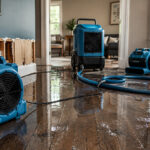
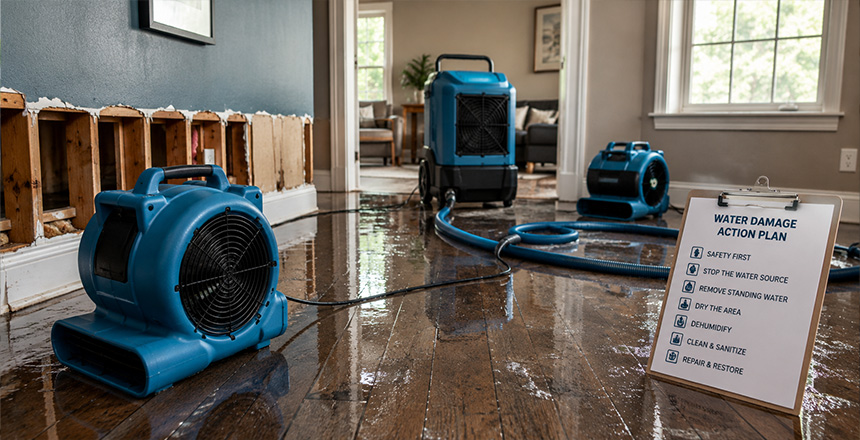
Professional restoration teams use:
- Water extraction equipment
- Industrial pumps
- Air movers
- Dehumidifiers
Fast water removal is critical to reducing restoration costs and preventing mold development.
Step 4: Dry The Affected Areas
Even after visible water is removed, moisture can remain trapped inside:
- Walls
- Flooring
- Cabinets
- Insulation
- Structural materials
Professional drying equipment helps restore proper moisture levels and prevent hidden damage.
Step 5: Prevent Mold Growth
Mold can begin developing within 24 to 48 hours after water exposure. Proper drying and moisture control are essential to avoid contamination.
Signs of potential mold growth include:
- Musty odors
- Discoloration on walls or ceilings
- Persistent humidity
- Peeling paint or warped materials
Early action can help prevent larger remediation costs later.
Step 6: Contact Restoration Professionals
Professional restoration services provide:
- Moisture inspection
- Structural drying
- Water damage cleanup
- Mold prevention
- Damage assessment
Experienced teams use advanced equipment and proven restoration methods to safely restore affected properties.
Why Fast Response Matters
Delaying restoration after water damage can lead to:
- Mold growth
- Structural deterioration
- Indoor air quality issues
- Increased repair costs
A fast response helps protect both the property and the health of occupants.
Conclusion
Water damage emergencies should never be ignored. Quick action, proper drying, and professional restoration services can significantly reduce long-term damage and restoration costs.
If your property has experienced water intrusion, professional assessment and drying services can help restore a safe and healthy environment as quickly as possible.